The core clears 10 degrees during full darkness on most nights from February to October. In January, November and December it's out of reach, either too close to the Sun or too low in the dark.
Core score by month
| Month | Core score | Best week | Moon-free core hours a night | Average cloud |
|---|---|---|---|---|
| January | 0 | Core not visible | 0 | 61% |
| February | 5 | February 10 to 16 | 0.6 | 65% |
| March | 17 | March 10 to 16 | 1.8 | 62% |
| April | 31 | April 6 to 12 | 2.9 | 57% |
| May | 41 | May 3 to 9 | 4.0 | 59% |
| June | 43 | June 1 to 7 | 5.2 | 57% |
| July | 40 | July 1 to 7 | 5.0 | 60% |
| August | 37 | August 1 to 7 | 3.3 | 55% |
| September | 20 | September 21 to 27 | 1.6 | 50% |
| October | 6 | October 1 to 7 | 0.5 | 48% |
| November | 0 | Core not visible | 0 | 49% |
| December | 0 | Core not visible | 0 | 63% |
Times are for the best seven nights in each month. Moon-free means the moon is below the horizon. The core counts as visible above 10 degrees in full darkness, when the Sun is more than 18 degrees below the horizon.
The best nights in 2027
- May: May 8 is the best night. The core is above 10 degrees and the moon is down from 12:54 am to 4:54 am, with the moon 10% lit that night.
- June: June 5 is the best night. The core is above 10 degrees and the moon is down from 11:04 pm to 4:24 am, with the moon 3% lit that night.
- July: July 1 is the best night. The core is above 10 degrees and the moon is down from 10:44 pm to 3:54 am, with the moon 5% lit that night.
Clock times are Eastern time with daylight saving applied. The best nights fall around the new moon, so the dates shift by about 11 days each year.
About Great Smoky Mountains National Park
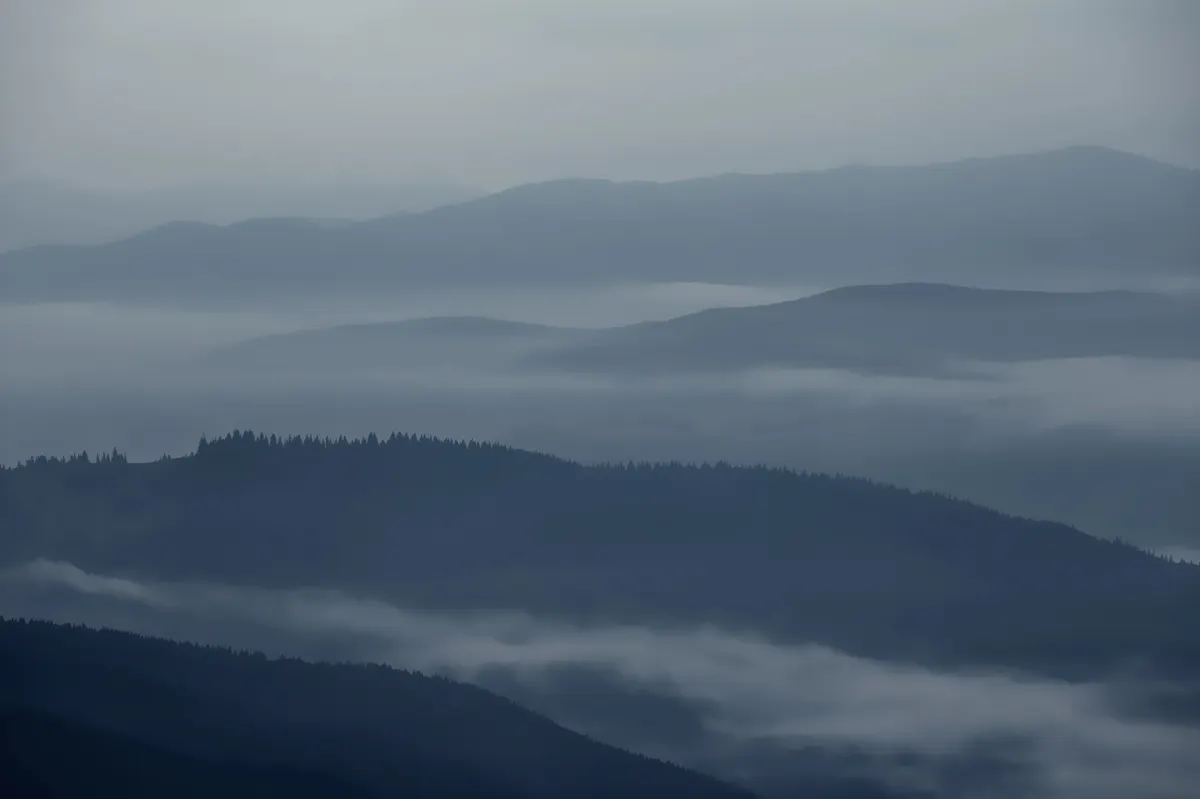
The Great Smoky Mountains straddle the border between Tennessee and North Carolina and see more visitors than any other national park in the country. Old forests, mist-filled valleys and an unusual number of salamander species are the draw. Cades Cove has historic cabins and plenty of deer.
Families lived and farmed in these hollows for generations until the land was bought for the park. The park was authorized in 1934 and dedicated in 1940. Pennies from school children, gifts from the public and a $5 million Rockefeller gift helped pay for it.
Great Smoky Mountains National Park is a national park in North Carolina and Tennessee. The National Park Service places its center at 35.60 degrees north and 83.51 degrees west, and the sky calculations on this page use that point. Visitor information, fees and alerts are on the park's own page. National Park Service (opens in a new tab).
How Great Smoky Mountains National Park compares
Its best monthly core score of 43 ranks 42 of 54 national park units that can see the core. The highest is Lassen Volcanic National Park at 86, and the lowest is Voyageurs National Park at 13. Cloud at Great Smoky Mountains National Park runs from 48% in October to 65% in February.
The score ranks months and parks. It isn't a forecast for any night, and it leaves out local weather, smoke and light from nearby towns. How the core score works.
How dark is the sky?
The Park Service models how much artificial light brightens the sky across the lower 48. At the point used for Great Smoky Mountains National Park, it puts the added glow at about 2.3 times the natural brightness of a moonless sky (a ratio of 2.33). That makes it 41st darkest of the 47 parks it covers. Lower is darker. This is a model, not a reading taken at the park, and it describes one point, so the edges of a large park can differ.
Questions people ask
When is the best time to see the Milky Way at Great Smoky Mountains National Park?
May, June and July are the best months. The best week of 2027 is June 1 to 7.
Can you see the Milky Way at Great Smoky Mountains National Park all year?
The core clears 10 degrees during full darkness on most nights from February to October. In January, November and December it's out of reach, either too close to the Sun or too low in the dark.
How dark is the sky at Great Smoky Mountains National Park?
The Park Service models how much artificial light brightens the sky across the lower 48. At the point used for Great Smoky Mountains National Park, it puts the added glow at about 2.3 times the natural brightness of a moonless sky (a ratio of 2.33). That makes it 41st darkest of the 47 parks it covers. Lower is darker. This is a model, not a reading taken at the park, and it describes one point, so the edges of a large park can differ.
Does the moon matter at Great Smoky Mountains National Park?
Yes. A bright moon hides the Milky Way. The best night in June is June 5, when the moon is 3% lit and the core is above 10 degrees from 11:04 pm to 4:24 am.
Dark enough, with city glow at the edges
The Park Service is straightforward about how dark the Great Smoky Mountains are. The park is fairly dark, it says, because the nearest large cities are 40 to 100 miles away. But light from Knoxville, Maryville, Pigeon Forge and Sevier County can be seen, along with Waynesville and Asheville in North Carolina and even Atlanta, about 140 miles away.
The Service compares the park's darkness to Bandelier in New Mexico, Assateague Island and Rocky Mountain. It also says plainly that the Smokies aren't among the 29 darkest of the 112 parks measured. That's useful honesty if you're deciding between a drive here and a drive west.
Measuring the sky from Kuwohi
Night sky monitoring takes place on the roof of the tower at Kuwohi, the highest point in Tennessee, where a technician uses a CCD camera to measure sky brightness.
For a ranger-led option, the Park Service has run star gazing programs at Cades Cove. In the 2018 announcement, people walked about a third of a mile from the orientation shelter with a ranger, because the Loop Road closes to motor vehicles at sunset, and the program was subject to postponement for rain or cloud. Check the park for current plans. For another Appalachian choice, see Shenandoah.
How it fits our numbers
In our 2027 numbers, the Smokies peaks in June with a core score of 43 out of 100. The best week is June 1 to 7, with about 5.2 moon-free hours a night and average cloud near 57 percent. Cloud and haze matter as much as city glow here, so treat the score as a guide to the sky overhead, not a promise.