How we handle open questions
Some of the biggest questions in space science don't have answers yet. This hub collects eight of them, and each page treats the question the same way: first what has been measured, then what scientists infer from it, then what nobody knows, and finally what observation would settle the matter. Keeping those four apart is the point. A mystery is easy to oversell, and it's just as easy to dismiss one that deserves attention.
The list covers very different scales. The Wow! signal is a single 72-second radio detection from 1977 that was never seen again. Tabby's star is a star whose brightness has dipped in irregular ways. 'Oumuamua was the first object seen passing through the solar system from another star, and it left before we could get a good look at it. Planet Nine is a proposed world, suggested in 2016 to explain the orbits of distant icy bodies, that nobody has found.
Others are about the universe as a whole. Dark matter and dark energy are names for effects we can measure but can't yet explain, and the Hubble tension is a disagreement between two careful ways of measuring how fast the universe is expanding. Fast radio bursts sit in between: brief flashes of radio waves from far away, with more known about them every year and a source that's still being pinned down.
Where a result is new, the page says when it came out and who reported it. Where scientists disagree, the page says that too, instead of choosing a side. If you've got a few minutes, the Hubble tension is a good place to start, because it shows how a disagreement of under ten percent can reshape a field. For the telescope behind many of these results, see the James Webb Space Telescope. Because these questions move, each page carries the date its sources were last checked, and a result that changes will be updated in place. A few of the pages are short on answers by design. Saying clearly that something isn't known is more useful than a confident guess, and it's the honest way to read the science as it stands today.
 Dark matterAbout 27% of the universe, never seen.
 Dark energyWhat's making the expansion speed up?
 The Hubble tensionTwo ways to measure the expansion that disagree.
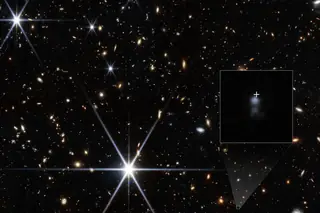 Fast radio burstsMillisecond flashes from across the universe.
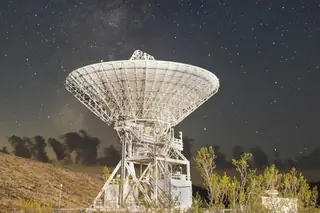 The Wow! signal72 seconds in 1977. Never repeated.
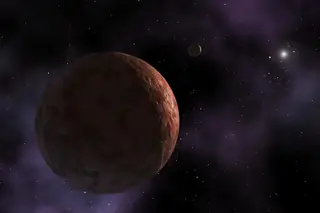 Planet NineA hidden world, or a trick of the data?
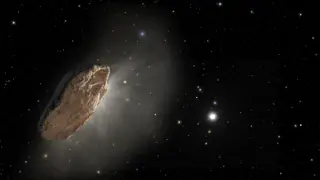 'OumuamuaThe first visitor from another star.
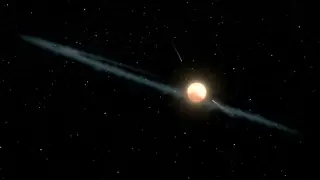 Tabby's starThe star that dims for no obvious reason.
Questions people ask
What counts as a mystery on this site?
A question that scientists have measured around the edges but can't yet answer. Each page separates what's measured, what's inferred and what's unknown.
Which mysteries are covered?
Dark matter, dark energy, the Hubble tension, fast radio bursts, the Wow! signal, Planet Nine, 'Oumuamua and Tabby's star.
Do the pages claim to solve any of them?
No. Where a result is new or disputed, the page says so and names who disagrees.