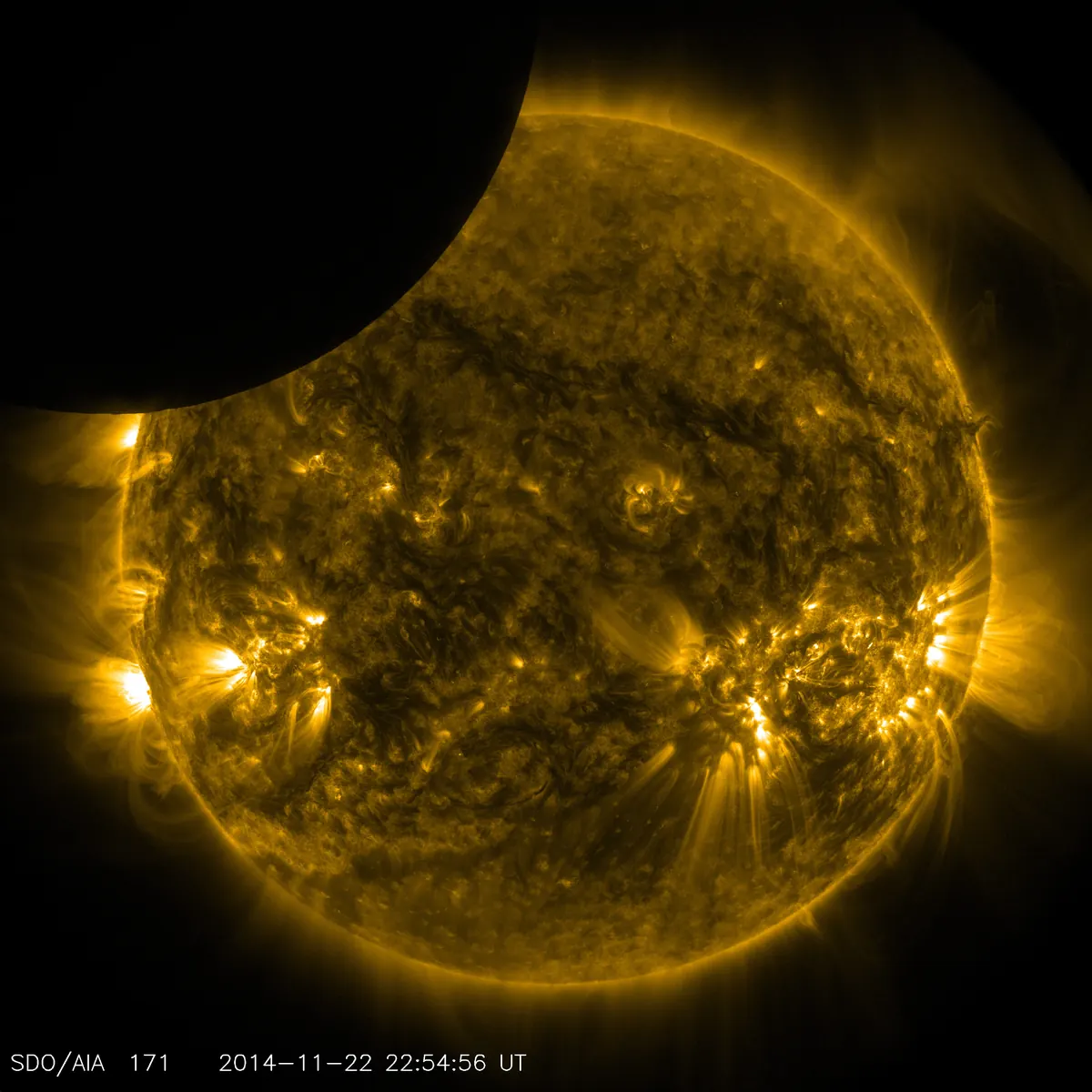
The next eight eclipse seasons
| Season | Eclipses | What happens |
|---|---|---|
| February 6, 2027 to February 20, 2027 | 2 | annular solar eclipse on February 6, 2027; penumbral lunar eclipse on February 20, 2027 |
| July 18, 2027 to August 17, 2027 | 3 | penumbral lunar eclipse on July 18, 2027; total solar eclipse on August 2, 2027; penumbral lunar eclipse on August 17, 2027 |
| January 12, 2028 to January 26, 2028 | 2 | partial lunar eclipse on January 12, 2028; annular solar eclipse on January 26, 2028 |
| July 6, 2028 to July 22, 2028 | 2 | partial lunar eclipse on July 6, 2028; total solar eclipse on July 22, 2028 |
| December 31, 2028 to January 14, 2029 | 2 | total lunar eclipse on December 31, 2028; partial solar eclipse on January 14, 2029 |
| June 12, 2029 to July 11, 2029 | 3 | partial solar eclipse on June 12, 2029; total lunar eclipse on June 26, 2029; partial solar eclipse on July 11, 2029 |
| December 5, 2029 to December 20, 2029 | 2 | partial solar eclipse on December 5, 2029; total lunar eclipse on December 20, 2029 |
| June 1, 2030 to June 15, 2030 | 2 | annular solar eclipse on June 1, 2030; partial lunar eclipse on June 15, 2030 |
Why eclipses cluster
The Moon's orbit is tilted compared with the path of the Sun in the sky. The two paths cross at two points, called nodes. An eclipse is only possible when the Sun is near a node at the time of a new or full Moon. The Sun passes a node about every 173 days, so eclipses cluster in two seasons a year, and within a season there's a new Moon and a full Moon close to the node. That's why a solar eclipse is often paired with a lunar eclipse about two weeks before or after it.
The nodes also move slowly backwards around the sky, so each season arrives about 19 days earlier on the calendar than the same one a year before.
Why it isn't exactly six months
If eclipses followed the calendar, they would come every six months. They come slightly sooner, because the nodes slide backwards along the Sun's path and the Sun reaches the same one earlier each time. It meets the same node after 346.62 days, not 365, and that interval is called the eclipse year. Half of it's 173.3 days, and that's the gap between eclipse seasons that the table above shows.
Since the eclipse year is 18.6 days shorter than a calendar year, the seasons move earlier by about 19 days a year, and after about 18.6 years they have gone all the way around the calendar. A pair of seasons that falls in March and September one year will fall in February and August a couple of years on.
How wide the window is
The Sun doesn't need to be exactly at a node for an eclipse. NASA's explanation gives a limit: a solar eclipse is possible when the new Moon is within about 18.5 degrees of a node, and a lunar eclipse when the full Moon is within about 12.25 degrees. The Sun moves about one degree a day, so that window is the origin of the 35-day eclipse season, and the long gap between seasons is the 173 days or so in which no new or full Moon is near a node.
The solar limit is wider than the lunar one because the Moon's shadow only has to touch part of Earth, a planet that's nearly four times as wide as the Moon.
Pairs, trios and the odd one out
Since a lunar month is about 29.5 days and a season lasts about 35, a season holds one or two new Moons and one or two full Moons that are close enough to a node. In the 211 seasons of 2001 to 2100, 210 include at least one solar and one lunar eclipse. The commonest size is 2 eclipses, and the range runs from 1 to 3.
Seasons with a single eclipse are rare: 1 of the 211. In this catalog, a year holds at most 4 solar eclipses. In 1935, however, Earth saw five solar eclipses, and the next year with five is 2206, according to published eclipse listings.
Why the pattern matters
The season is the first tool to predict an eclipse. An observer who knew that the Sun passes a node every 173.3 days could scan the calendar for new and full Moons near that date and find the likely ones. The Saros cycle on the how often eclipses happen page adds the finer detail of which ones are total, partial or annular.
The same logic explains why the second eclipse of a pair is never a surprise. If a total solar eclipse falls at new Moon, the full Moon about two weeks before or after it's probably also near the node, and a lunar eclipse is likely. The solar and lunar comparison goes into how the two differ.
The next season
The next season in the catalog starts on February 6, 2027 and ends on February 20, 2027, with 2 eclipses. The season after it starts about 173 days later, which is 9 days earlier than the same date half a year on, because the nodes keep moving. The next solar eclipse and next lunar eclipse pages give the exact times for the coming ones.
Watching the calendar slide
You can see the drift in the next few seasons. Counting every second season so that we compare like with like, the one that begins on February 6, 2027 is followed by one starting on January 12, 2028 and then one on December 31, 2028. Each starts earlier in the calendar year than the one before it, because the nodes keep sliding.
Anyone who plans to follow eclipses year after year can therefore stop checking every month. Find the dates of one season, and the next will be about half a year later, minus a few days. Then check the table for what type of eclipse each season brings, because the type depends on how close the Moon is to the node, not on the date.
Because two seasons are only 173.3 days apart and a calendar year has 365, a year sometimes holds three. That happens when a season begins within a couple of weeks of New Year's Day, so that the next falls in the summer and a third arrives before December ends.
Over 2001 to 2100 the catalog holds 224 solar and 228 lunar eclipses, so a season brings about two eclipses on average. A quiet-looking calendar is therefore misleading: the eclipses don't spread out evenly, they arrive in clumps with long gaps between.
 How often eclipses happenCounts per year and by type.
 Next solar eclipseThe next one with times.
 Next lunar eclipseThe next one with phase times.
Questions people ask
What's an eclipse season?
A stretch of about a month, roughly every 173 days, when the Sun is close enough to one of the Moon's orbital nodes for eclipses to happen.
When is the next eclipse season?
The next season starts on February 6, 2027.
Why do solar and lunar eclipses come in pairs?
A new Moon and a full Moon are about two weeks apart, so if one makes an eclipse near a node, the other often does too.
How many eclipses can there be in one season?
Between 1 and 3 in this catalog.