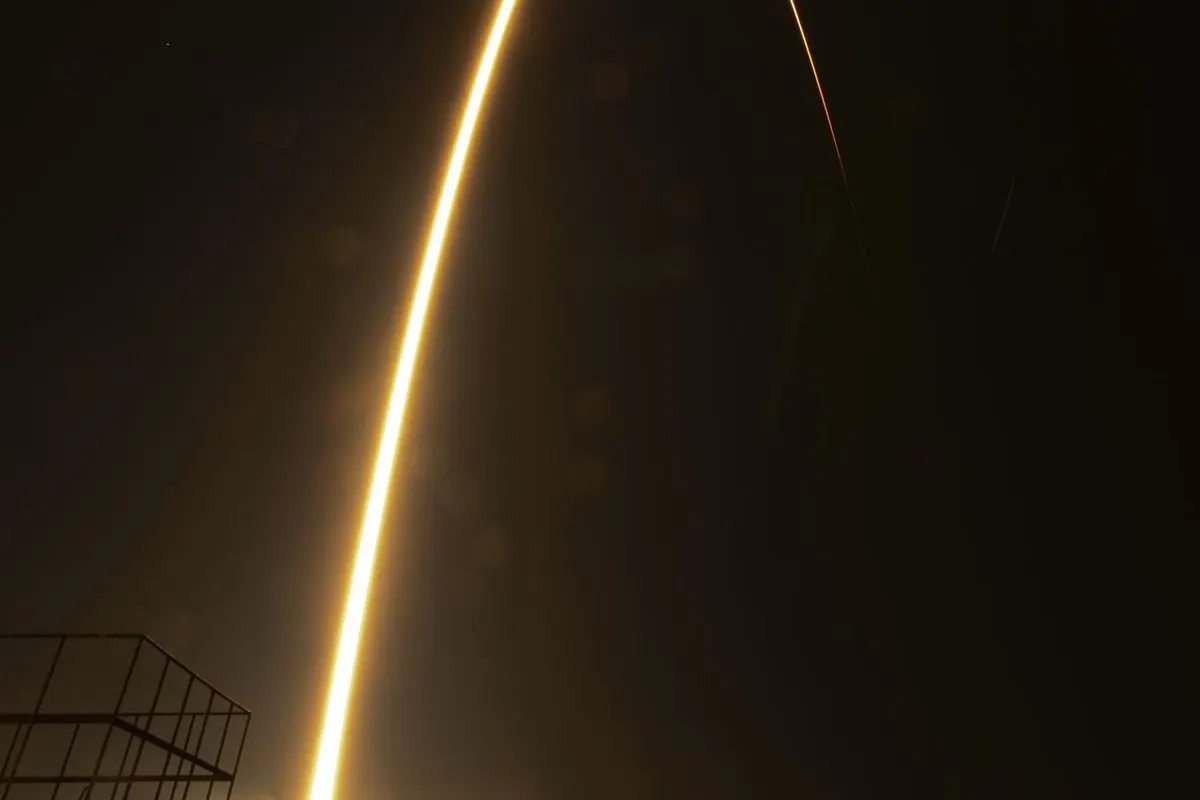
Three cosmodromes, one of them in Kazakhstan
Russian rockets have made 900 orbital launch attempts since January 21, 1992, and 859 succeeded. GCAT counts by the launch vehicle's country, so Baikonur, which is in Kazakhstan, supplies 558 of them, 62%. Plesetsk supplies 304, and Vostochny 15.
2025 had 17 launches, and 2026 has 14 through October 16, 2026. Soviet-era launches aren't counted here. Even so, the count has fallen from 55 in 1992 to 17 in 2025.
Launches per year
Launches by month in 2025
Pads and launch complexes
The busiest pads over the last five years.
Which rockets
Rockets launched in 2024 and 2025.
Russia's own fleet is on the Russian satellites page.
Baikonur
Baikonur was founded in 1955. Yuri Gagarin left from it on April 12, 1961. Russia's lease, extended in 2004, runs to 2050 at 115 million dollars a year.
Gagarin's Start (Site 1/5) flew its last launch on September 25, 2019. More recently, Site 31/6 was badly damaged after the Soyuz MS-28 launch on November 27, 2025 when its service cabin fell into the flame trench; Roscosmos announced the restoration on March 3, 2026. Separately, Kazakhstan took control of the Baiterek launch complex on March 7, 2023, citing a debt.
Plesetsk, found by outsiders
Plesetsk is in the north of Russia. The cosmodrome's history dates from a decree of July 15, 1957 (some sources give January 11, 1957). The first satellite to launch from it was Kosmos 112 on March 17, 1966. The site was first identified by British physics teacher Geoffrey Perry and his students from satellite orbits.
The first launch in GCAT's Russian count, on January 21, 1992, was also from there. The site had 304 launches in the log, and its most-used pad in the recent table, Plesetsk, LC43/4, had 26.
Vostochny, the new one
Vostochny is in the Russian Far East. Its first launch was on April 28, 2016, a Soyuz-2.1a carrying three satellites, after a scrubbed attempt the day before. GCAT lists 15 launches from it, with 9 in the recent pad table.
Vostochny's 15 launches are 1.7% of Russia's 900. Other sites in the log are small: Yasniy with 10, Svobodniy with 5 and the Barents Sea with 3.
Angara, the replacement
Angara was planned to let Russia phase out Proton, which is criticized for its toxic propellants and reliability problems. The family's first launch was July 9, 2014, a suborbital Angara 1.2PP test from Plesetsk. Angara A5 first flew on December 23, 2014 from Plesetsk, reaching geosynchronous orbit, and Angara 1.2 first flew on April 29, 2022 from Plesetsk, whose payload Kosmos-2555 didn't reach a stable orbit.
The first Angara launch from Vostochny came on April 11, 2024, an Angara A5 test flight with a mass simulator from Site 1A. The rocket table shows Angara-1.2 with 5 launches, and one each for Angara A5 and A5/Orion.
The busiest pad was the damaged one
The pad table shows Baikonur's LC31 as the busiest in the recent table, with 40 launches. That's Site 31, the pad that was damaged on November 27, 2025. Plesetsk's two pads in the table have 26 and 9, and Vostochny's single pad has 9.
A long slide
The yearly record shows how far the cadence has fallen. Russian rockets flew 55 times in 1992, 30 in 2010 and 31 in 2013. The count was 26 in 2015 and 17 in 2016, and it has stayed between 12 and 22 since. The data doesn't say why the drop came in those years.
For scale, 2025 saw 329 orbital launches worldwide. Russia's 17 were 5.2% of them.
Share of the world total
In 1992, Russian rockets flew 55 of the world's 97 orbital launches, or 57%. In 2025 they flew 17 of 329, or 5.2%.
The Soviet years aren't in these counts, but GCAT's launch log for the Soviet Union has 2,457 launches, almost three times the 900 Russian launches since.
What flies now
The rocket table is short. Soyuz-2-1B has 19, Soyuz-2-1A has 18, and Angara-1.2 has 5. The monthly pattern for 2025 ranges from 0 to 2.
Compare that with China and Florida, or see what the rockets carry on the Russia satellites page. The yearly record is on the launches per year page.