The year so far
This page is a snapshot, not a result. The data runs through October 16, and 246 launches have been logged so far, 3 ahead of the 243 at the same point in 2025. The United States has 131, China 72, New Zealand 15 and Russia 14. SpaceX has flown 120: 114 Falcon 9s, 3 Falcon Heavies and 3 Starship flights. Everything on this page moves when the catalogue is refreshed.
3,642 payloads were carried into orbit. 7 launches failed. 3 Starship test flights are included in the total.
Launches by month
By country
By launch site
By rocket
Launches in every year since 1957.
The landmark flights so far
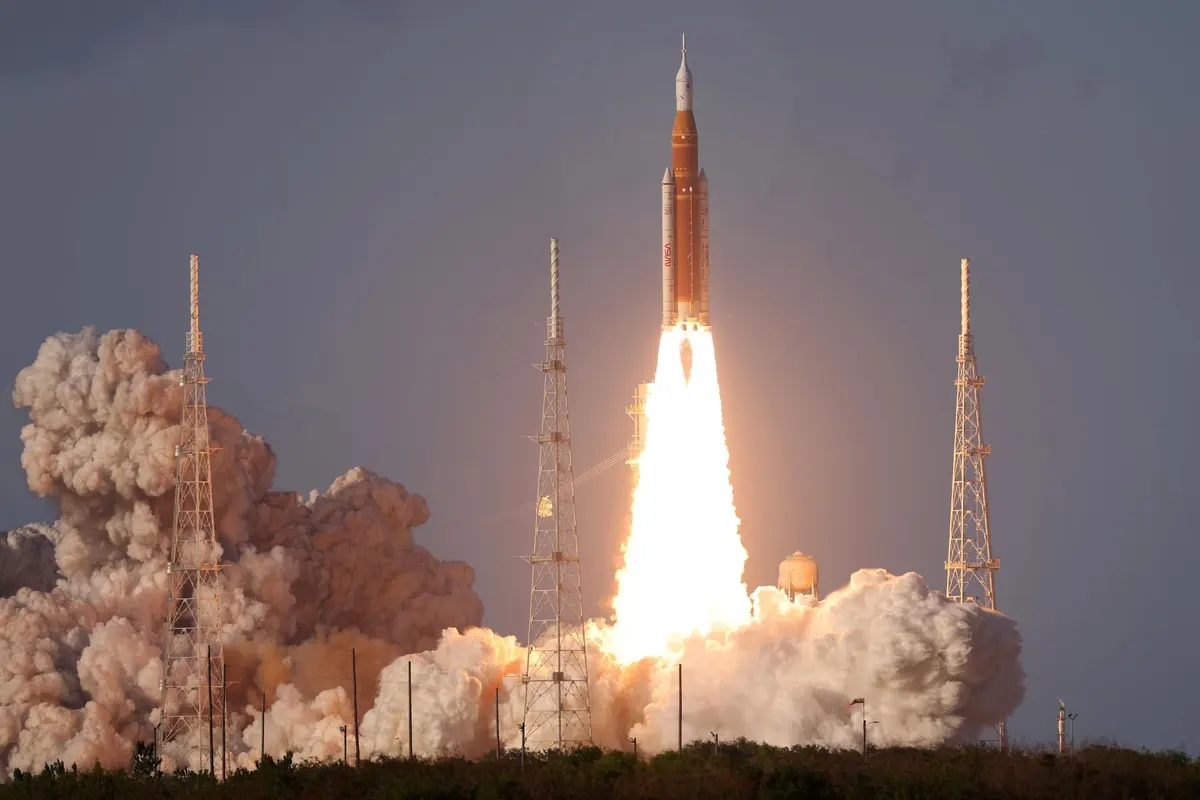
Artemis II. Four astronauts launched on the Space Launch System on April 1, 2026 for a flight around the Moon, passed their farthest point from Earth on April 6, 2026 and splashed down on April 11, 2026. Our ledger grades it a success. The moonwalker page keeps the people who walked there separate from those who flew past.
New rockets. GCAT logs 12 rocket types flying for the first time in 2026, among them Ariane 64 (February 12), Soyuz-5, Starship V3, Long March 10B and Vikram-1. Ariane 64 launched 32 satellites on February 12, 2026. Wikipedia's page for the year lists a Zhuque-3 flight on August 18, 2026 with a first-stage recovery.
People and telescopes. Crew-11 came home on January 15, 2026, Crew-12 launched on February 13, 2026 and Crew-13 on October 1, 2026. NASA's Nancy Grace Roman Space Telescope launched on August 30, 2026. GPS added two satellites, launched on January 28 and April 21; see the GPS page.
What has failed
Seven launches have failed so far, which leaves 97% successful. India's PSLV failed on January 12, a Long March 3B on January 16, and the first flight of Gushenxing-2 on January 17. Japan's Kairos failed on March 5, China's Tianlong-3 on its first flight on April 3, Blue Origin's New Glenn on April 19 and a Long March 7A on August 10.
Rockets and launch sites
Falcon 9 flew 114 of the 246 launches (46%), ahead of Electron with 15 and Chang Zheng 6A with 8. By site, Vandenberg had 65, Cape Canaveral 55, Jiuquan 27 and Mahia, New Zealand 15. Ten countries launched at least once so far, counting the launching country the way GCAT does. The launches put 3,642 satellites into orbit, an average of 15 per launch. 2,236 of them, 61%, were Starlink satellites. The rest, 1,406, came from every other operator in the world put together.
New rockets and shifting shares
GCAT logs twelve rocket types flying for the first time in 2026: Gushenxing-2 (January 17), Ariane 64 (February 12), Lijian-2 (March 30), Tianlong-3 (April 3), Soyuz-5 (April 30), Starship V3 (May 22), Chang Zheng 12B (June 1), HASTE (June 11), H3-30S (June 12), Chang Zheng 10B (July 10), Vikram-1 (July 18), Zhishenxing-1 (September 1). Two of them failed on that first flight. Some are new versions of a rocket that already existed, which GCAT lists under a new name.
The shape of the year
February was the quietest full month with 18 launches and April the busiest with 32. By quarter the counts run 72, 84, 80 and 10, and the last figure is partial.
Where the year ranks
Among the 70 years in the log, 2026 ranks 3rd for the number of launches so far. The last earlier year with at least that many launches was 2025, 1 year before. The log holds 7,433 launches in all, an average of 106 a year, so 2026 is running at 2.3 times the long-run average.
How to read a partial year
Vandenberg has 65 launches so far and Cape Canaveral 55, a reversal of 2025. The comparison with 2025 is fair only because both counts stop on October 16. December 2025 alone had 40 launches, so a strong finish could move the final total a long way from where it stands now. Starlink has flown 85 launches carrying 2,236 satellites. SpaceX's share of all launches so far is 49%, against 52% for the whole of 2025. For the finished years, start with 2025 and read back. The long view is on launches per year since 1957.