A network rescued from bankruptcy
OneWeb has 652 active satellites as of October 17, 2026, from 656 launched on 20 launches. The first generation was planned as 648 satellites, described as 600 active plus 48 spares in orbit, so 8 more flew than the plan listed.
The company was founded in 2012 as WorldVu by Greg Wyler. It launched its first satellites on February 27, 2019, filed for bankruptcy on March 27, 2020, and was bought out of it by a consortium led by Bharti Global and the UK government, who agreed the deal on July 3, 2020, with about 500 million dollars each. The sale closed on November 20, 2020.
OneWeb has launched 656 satellites on 20 launches since February 27, 2019, and the most recent launch was on October 20, 2024.
Satellites launched per year
Data table
| Year | Launches | Satellites |
|---|---|---|
| 2019 | 1 | 6 |
| 2020 | 3 | 104 |
| 2021 | 8 | 284 |
| 2022 | 3 | 110 |
| 2023 | 4 | 132 |
| 2024 | 1 | 20 |
Rockets used
Where they orbit
These bands come from GCAT, which records the orbit class from its own catalogue and can lag behind the real position of a satellite. OneWeb launches its satellites into lower orbits and then raises them. Eutelsat (opens in a new tab), which now runs the network, says the satellites fly in 12 orbital planes 1,200 km above the Earth, so treat the split above as the GCAT label, not the working altitude.
OneWeb satellites have flown on 4 types of rocket, led by Soyuz-2-1B with 11 launches.
Six launch years
OneWeb launched 6 satellites in 2019, 104 in 2020 and 284 in 2021, its biggest year. The totals for 2022 and 2023 were 110 and 132, and the last launch, on October 20, 2024, carried 20.
GCAT's log has no OneWeb launch after that date, as of its October 16, 2026 cutoff. Four of the 656 satellites aren't counted as active. Across its 20 launches OneWeb averaged 32.8 satellites each, over 5.6 years from first launch to last. The busiest launch year was 2021, with 8 launches carrying 284, an average of 35.5 per launch.
Losing the Soyuz rockets
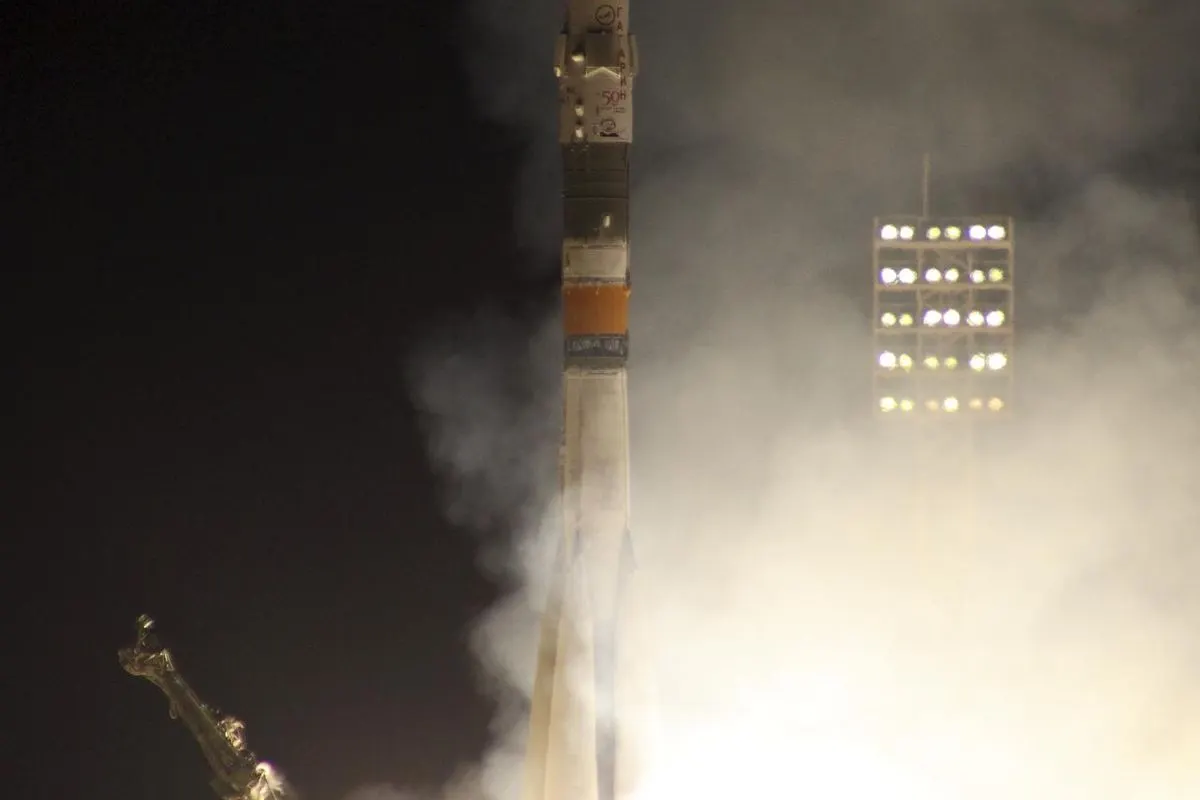
Soyuz rockets flew 13 of the 20 launches, 65%, and Falcon 9 flew 5, 25%. A 36-satellite Soyuz launch from Baikonur planned for March 2022 was cancelled after Russia demanded assurances and that the UK sell its shares.
OneWeb then moved to other rockets. An Indian LVM3 flew on October 22, 2022, and a Falcon 9 on December 8, 2022. The rocket table now reads Soyuz-2-1B 11, Falcon 9 5, Soyuz-ST-B 2 and LVM3 2. For the Russian sites, see launches from Russia.
British money, French owner
The company completed a merger with the French operator Eutelsat in September 2023. GCAT still credits the satellites to the United Kingdom, and its operator column carries the name under several labels, including One Web (NAA) and Eut. One Web.
That makes OneWeb 86% of the British satellite count. Without it the United Kingdom's count would fall to 109, below both Russia's and Japan's.
Three rockets, three countries of credit
GCAT gives each satellite a launch country. For OneWeb that splits 424 satellites to France, 156 to the United States and 72 to India, out of 652 active satellites with OneWeb in their names. France's share lines up with the Soyuz flights, the United States' with Falcon 9 and India's with LVM3.
So "whose rocket flew it" and "who owns it" give different answers for the same satellites. The France page shows the launch side of that split.
Who owns the owner
Eutelsat was founded in 1977 as an international organisation, and it's headquartered in Paris. Its main shareholders were set to be the French state with 29.65 percent, Bharti Space with 17.88 percent and the UK government with 10.89 percent, the stakes Eutelsat announced for its November 2025 reserved capital increase (before a later rights issue). The merger with OneWeb was announced on July 26, 2022.
Eutelsat is described as having 35 geostationary satellites and 600 low Earth orbit satellites through its OneWeb subsidiary. The fleet is middle-aged for a constellation. The median OneWeb satellite in GCAT's active list is 5.0 years old.
Bigger than the geostationary belt
OneWeb's 652 active satellites outnumber the 575 satellites in geosynchronous orbit, the whole belt where television and weather satellites sit. The geostationary page breaks that belt down.
They also outnumber the active fleets of 375 for Russia, 143 for Japan and every other national fleet on this site except the United States and China. The United Kingdom's count is largely OneWeb.
The scale next to Starlink
OneWeb's 652 active satellites are 3.8% of the 17,101 in orbit as of October 17, 2026. Compare that with the 11,137 satellites in Starlink, or with the 392 in Kuiper. OneWeb's fleet is about 6% of Starlink's size.
The wider context is on the satellites in space page and the space debris page.